Switch pullets to a layer-feeding program when their stage of development and the feed manufacturer's directions call for it. Do not make the decision from the calendar alone. A growing pullet and an actively laying hen have different jobs to support, and a bag labeled for layers is not simply a stronger version of chick starter.
The practical starting point is the flock in front of you: its age, breed or type, laying status, current feed, and whether younger birds share the same feeders. Those details make a feed transition a useful management decision instead of a guess.
Start with the bird and the actual bag
Feed names are useful signposts, but they are not interchangeable instructions. Starter, grower, developer, starter-grower, and layer products can have different intended uses. Read the directions on the specific product rather than assuming that one company's feeding schedule applies to another company's feed.
The University of Minnesota's pullet guide describes a progression through growing feeds and into laying feed as birds begin production. It also recommends using breeder guidance when assessing growing pullets. Treat that as a reason to match the program to the birds, not as permission to put every breed on an identical timetable.
Our chick-starter feeding guide covers the earlier stage. This decision comes later: what changes as a growing bird approaches lay, and how do you check that the next ration is appropriate?
Use three checkpoints before changing feed
The growing-bird checkpoint
Confirm that birds still developing are receiving a complete feed intended for their stage. Check what the directions say about moving to the next product. Keep the tag available when speaking with the manufacturer or feed supplier.
The laying-status checkpoint
Record whether eggs have started, whether only some pullets are laying, and whether birds are developing unevenly. A first egg is useful information, but it does not describe every bird in a mixed group. Note which birds you can identify rather than guessing that all pullets have started together.
The shared-feeder checkpoint
Look at access. If chicks, older pullets, laying hens, and other poultry species share a feeder, the feed cannot be selected solely around the most productive hen. List the different groups and ask the feed manufacturer or an Extension educator how to manage access and ration choice for that combination.
Calcium is one reason the distinction matters
Laying diets are formulated for egg production. UMaine's flock-nutrition bulletin distinguishes their calcium provision from growing-bird diets and warns against inappropriate calcium exposure in young poultry. This is a reason to avoid moving an immature group onto a laying ration simply because a bag has run out.
Do not try to turn an unsuitable ration into the right one by adding several extras. A photograph of the main feed label is a better starting point for advice than a homemade correction based on one nutrient number. The Feed Scoop guide to reading a feed tag explains the other information worth checking.
Build a short transition record
You do not need a complicated spreadsheet. Keep one page with these details:
Bird group, approximate hatch date, and breed or type.
Current feed name, lot information, and feeding directions.
What the next product is intended to supply and when its label says to use it.
Date eggs first appeared and which birds are known to be laying.
Other feeds, scratch, supplements, or treats being offered.
Questions about a shared feeder or birds developing at different rates.
For example, "These pullets share a run with adult hens, but only two pullets have started laying" is a specific question. It gives the manufacturer or educator something useful to work with. "What is the best feed?" leaves out the facts that determine whether a product fits.
Observe the change, not just the purchase
Once you have selected a suitable program, follow its feeding directions and watch the flock. Can every bird reach the feed? Is a feeder empty, blocked, damp, or being guarded by dominant birds? Are clean water and the intended ration consistently available?
Make dated notes if the product changes. Include the actual product names and the reason for the change. Avoid introducing several new supplements at the same time without a clear plan; doing so makes it harder to explain what the flock is eating and why.
If a bird is unwell, losing condition, or developing differently from the group, seek appropriate veterinary or Extension help. A feed transition is not a diagnosis, and switching bags should not be used to explain every flock problem.
The practical takeaway
Choose the next feed by matching the birds' development and laying status to the product's intended use. Check mixed-age access before making a group-wide change, keep the label and a few dated observations, and ask a specific question when the setup is complicated. The goal is an appropriate complete ration that the right birds can actually eat—not a change made only because another week passed.
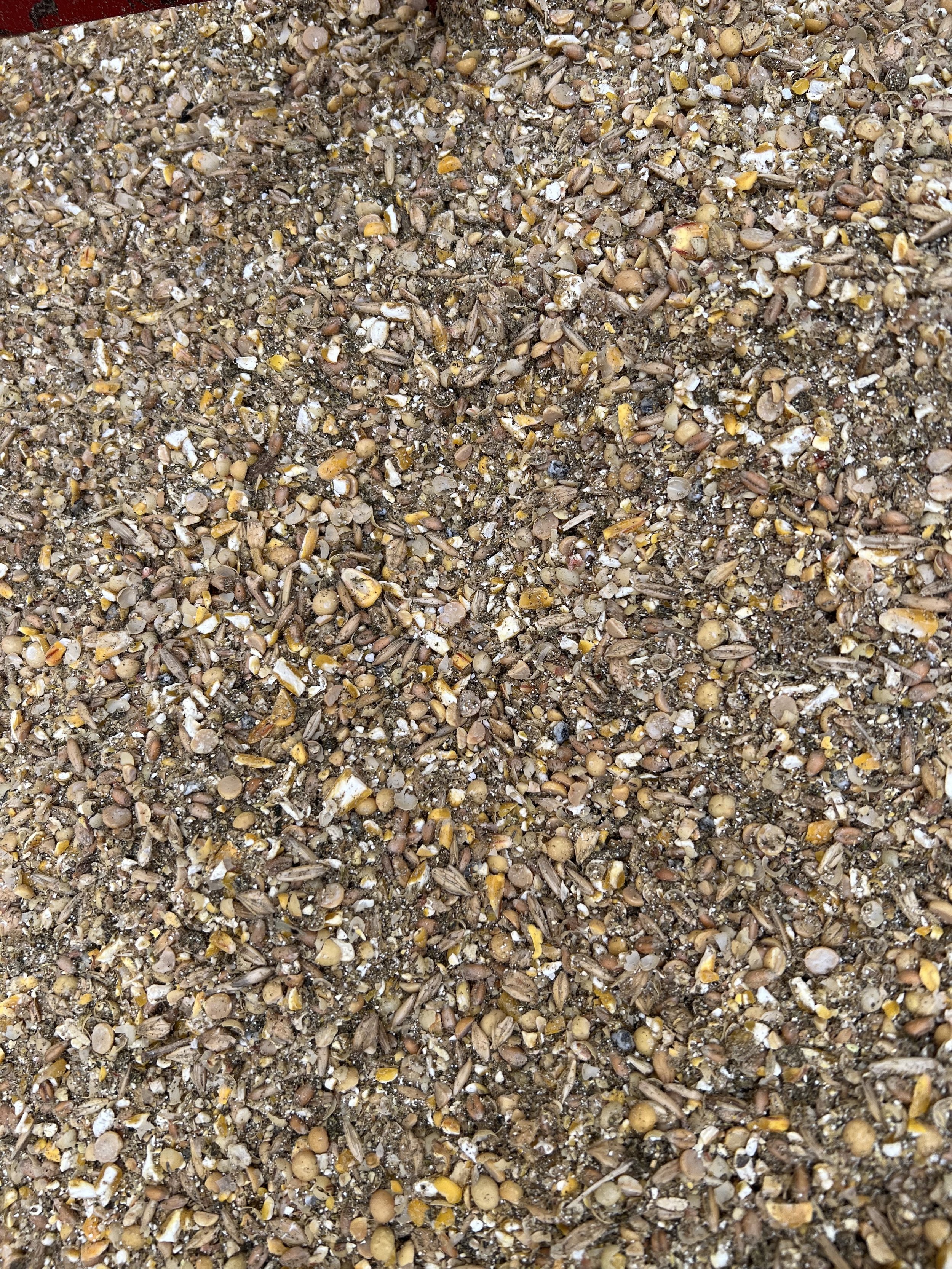
✔️ 100% NON-GMO: 18% protein layer feed made with fish meal, non‑GMO corn, wheat, oats, barley, roasted soybeans, and aragonite.
✔️ Made with Fertrell minerals and supplements (natural).
✔️ GRIT MIXED IN.
✔️ FLAVOR THEY LOVE: Chickens, hens, and ducks gobble this—black soldier fly larvae, fish meal, corn, and herbs.
✔️ WHOLE GRAIN: Simple, clear ingredients.
✔️ HELPS HEALTHY EGGS: High-quality feed for good egg production.
✔️ OYSTER SHELLS MIXED IN for calcium and minerals.
✔️ LOCALLY SOURCED: Grains from sustainable local farms.
Ingredients: non‑GMO corn, non‑GMO wheat, non‑GMO oats, non‑GMO barley, non‑GMO roasted soybeans, aragonite, fish meal, lysine, methionine
From the breeder pen to the brooder.
Explore two supplements for different stages of your poultry program.
Show Pro Poultry Breeder Supplement
A supplement to complement a complete poultry ration during breeding. View Breeder Supplement.
First Peck® Chick Start Supplement
A chick-start supplement mixed into starter feed for newly hatched poultry. View First Peck.
Use each product according to its label alongside age-appropriate complete feed.
Reviewed October 27, 2026.
Poultry Nerds · Incubation Masterclass
Give your next hatch a clear plan.
Explore chicken and quail incubation lessons—from breeder preparation and egg selection to incubator setup, candling, and hatch-day decisions.